
How to illustrate a story
In my art class on Wednesday nights, we have recently started working on a project to create illustrated storybooks for poems based on a Domestika course by Alfredo Cáceres, where he breaks down his inspirations and his workflow for developing an illustration from concept to the final product. I learned so much from his course and when I shared it with my crew, they really enjoyed it as well. So I’d like to share what I learned with you in this post and how I applied it to our class.
Alfredo breaks down his workflow into the following processes:
Concept development
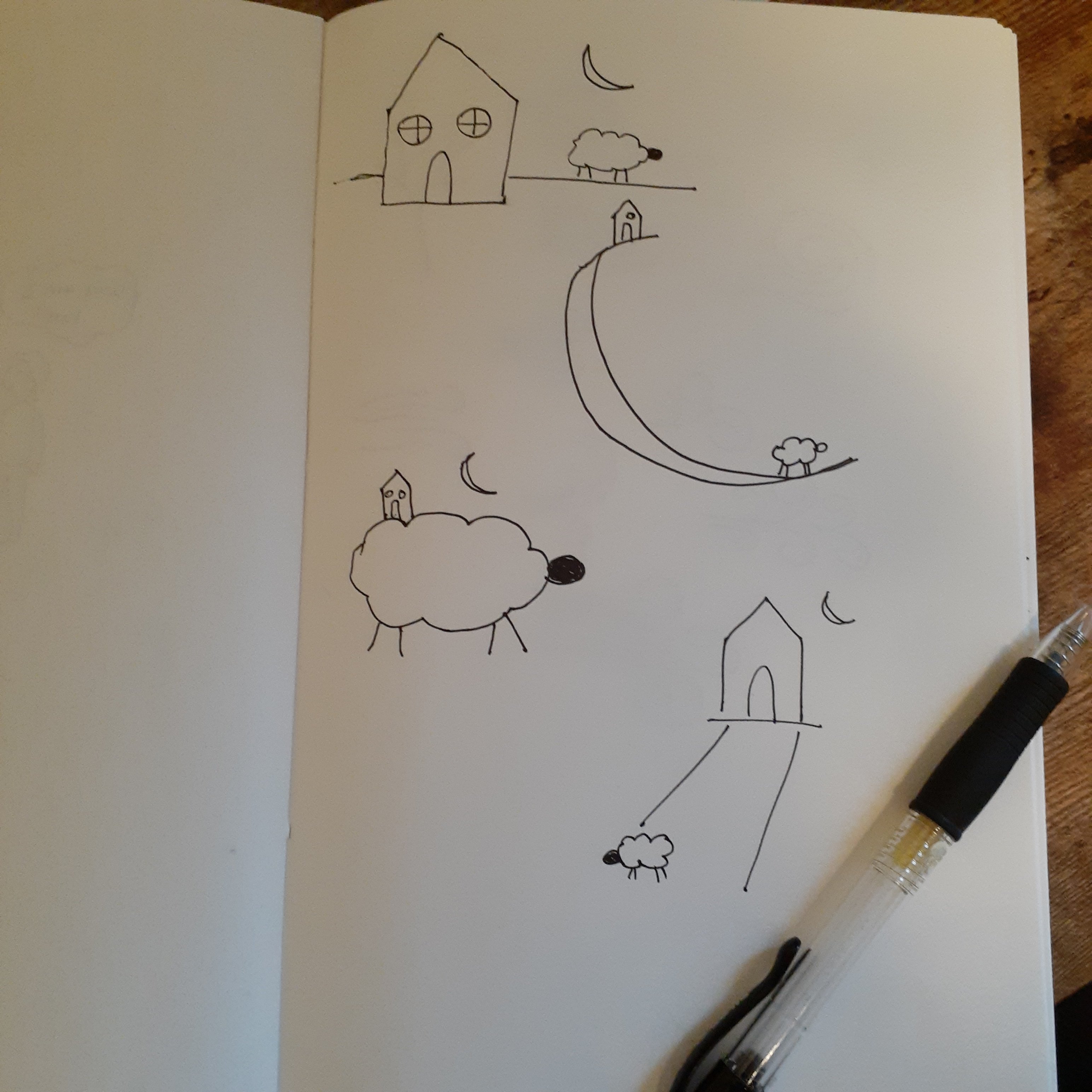
The focus of this is to really develop out a concrete idea of how you want to draw – without getting into the weeds of the actual composition. In this section, it’s best to focus on choosing two or three characters/objects you want to illustrate and then experimenting with the positioning of how you illustrate these. The example that he gives is how you might lay out a house, a sheep, and a moon.
Selecting the best illustration concept
Once you have spent some time drafting ideas, this is the time to figure out which of your ideas are best aligned with the story. This requires you to look at your concepts from a critical lens and to really understand what you want to convey.
Sketching Phase I
This is the part of the process where you further refine the concepts. This is where you may want to look up other illustrations on Pinterest, the websites of other artists you admire, or at the very least google. Then you try to incorporate them into your work. At this point, you will come away with a more detailed sketch of your work – which may still need further refinement, but is much clearer about the concept.
Sketching Phase 2
This is where you further refine the details of the piece – really concentrating on elements such as texture of objects and the details of the characters.
Painting or Digital Illustration
This is the phase where you finally trace your image onto watercolor paper or scan it on your computer to add color and create the finished product. This part involves a lot of color and shading decisions – which really make the illustration come alive.
So, how am I applying this? The poem I’m currently illustrating is:
The Guest House by Jellaludin Rumi
This being human is a guest house.
Every morning a new arrival.
A joy, a depression, a meanness,
some momentary awareness comes
as an unexpected visitor.
Welcome and entertain them all!
Even if they’re a crowd of sorrows,
who violently sweep your house
empty of its furniture,
still, treat each guest honorably.
He may be clearing you out
for some new delight.
The dark thought, the shame, the malice,
meet them at the door laughing,
and invite them in.
Be grateful for whoever comes,
because each has been sent
as a guide from beyond.
Here is a step by step of my progress so far:
Concept development

2. Selecting the best illustration concept
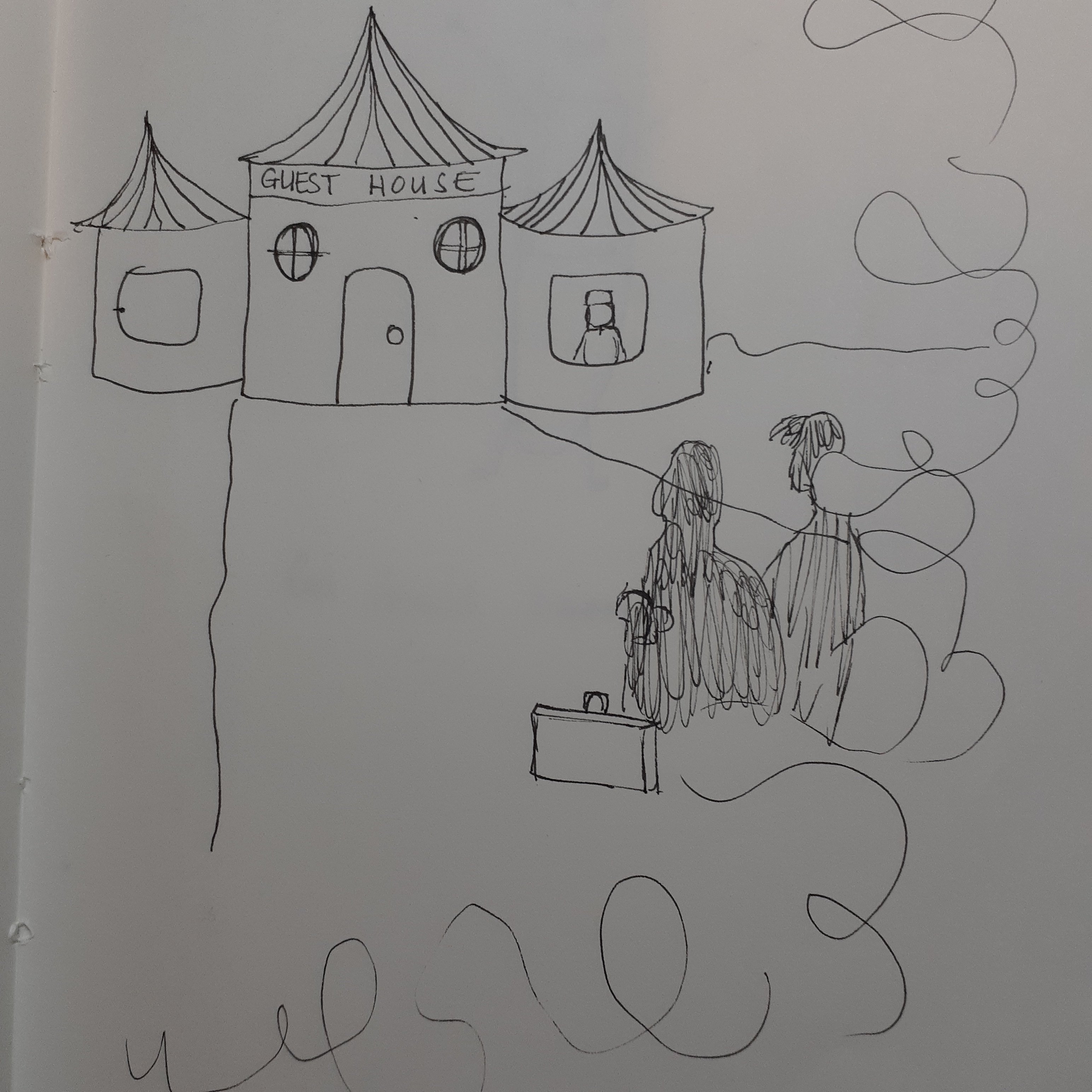
3. Sketching Phase 1
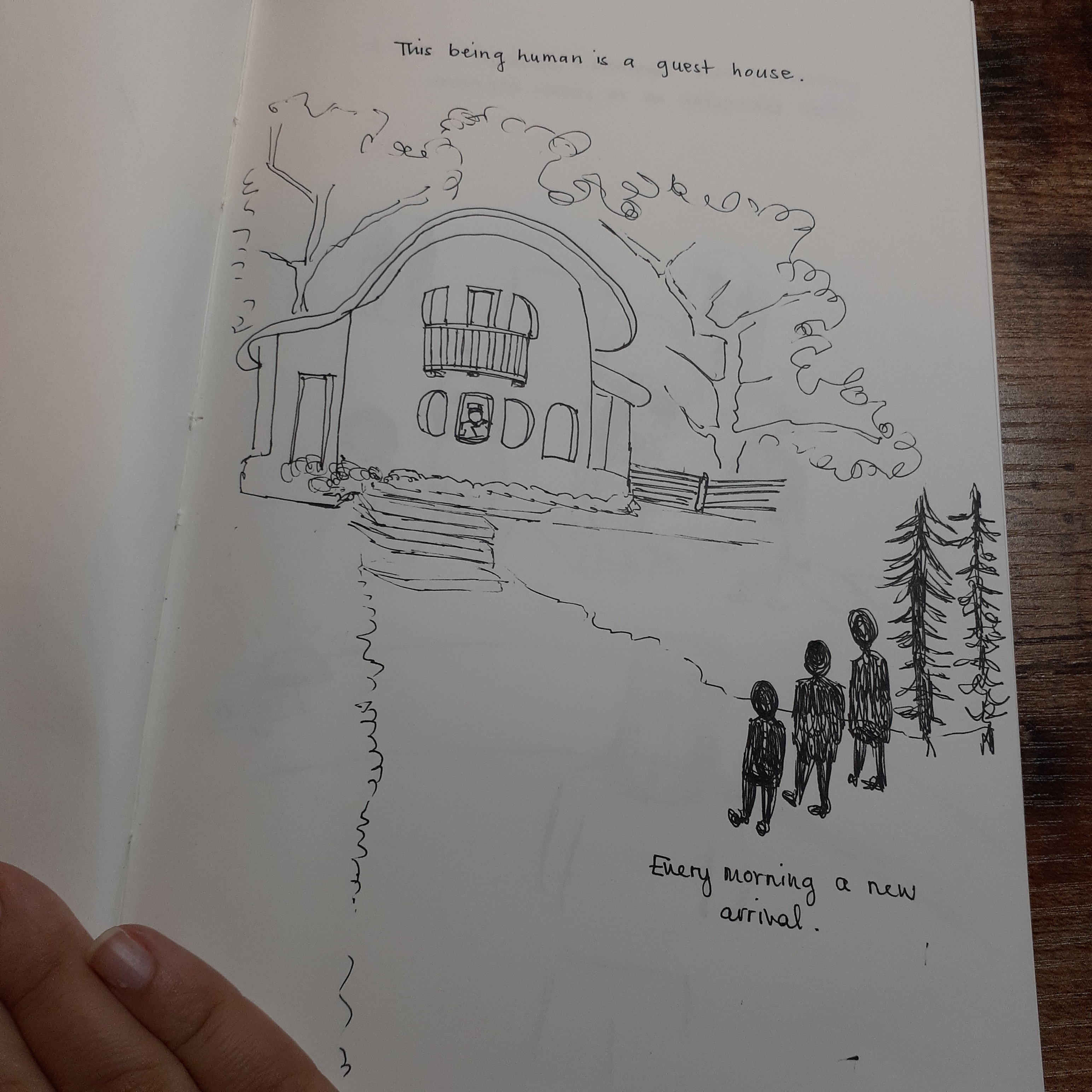
I’ll share the final illustration when I complete it =).


